Medicine in the Age of Artificial Intelligence and its Implications

Writer: Farwa Tashin
Editor: Julia Lalla
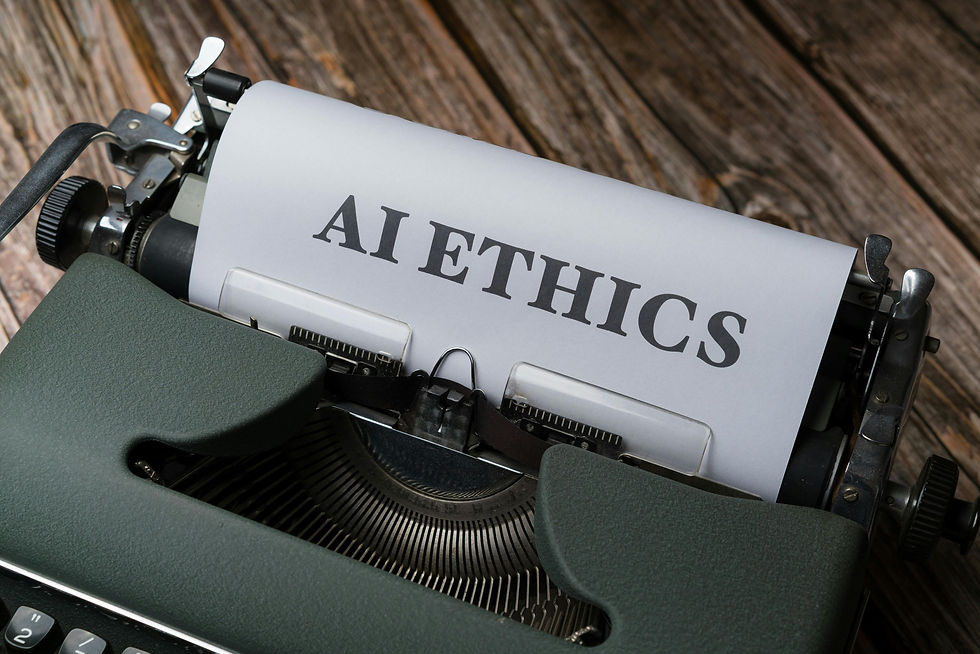
As technology continues to become more advanced, we can see Artificial Intelligence (AI) begin to make its way into the healthcare system. Artificial Intelligence has been rapidly growing and expanding across the world in settings like schools, hospitals, workplaces, and even your own home. There are students using ChatGPT to learn their schoolwork and help them with assignments, professionals who use AI software to organize and present data for their company, and even people who use Amazon’s Alexa to maintain their devices, play music, and ask Alexa questions from the comfort of their own homes. Among the various places we can find AI, within the recent years, AI has made its way into the healthcare industry with potential to transform patient care and administrative tasks [1]. As AI becomes more integrated into healthcare, we must begin thinking about deeper ethical questions: How does one feel about being treated by a robot? Can a robot be as friendly and compassionate as a human doctor? How accurate can a robot’s diagnosis even be? Most importantly, should AI remain as a helping hand to the main healthcare professionals or should AI be trusted on its own as a decision maker in medicine?
AI’s growing presence in medicine is strongly driven by its advanced capabilities in nearly all sectors of the healthcare industry. It has the ability to improve diagnostics and accuracy in medicine because of its advanced ability to analyze complex information and datasets while offering precision [2]. This allows clinicians and physicians access to more accurate insights, which will further make it easier for them to assess the patient more accurately and efficiently and provide the best treatment for them. Examples of AI have already been seen as AI-powered imaging technologies have already reduced diagnostic mistakes in radiology by efficiently analyzing medical images taken through CT, MRI, and X-ray scans [2]. Additionally, recent findings have further exemplified AI’s expertise in medicine. In early 2023, researchers evaluated ChatGPT on the United States Medical Licensing Exam, which consists of three exams that are designed to assess a physician’s ability to successfully diagnose and treat patients by testing medical students’ knowledge of essential concepts and patient care skills. The findings of the study presented that ChatGPT “performed at or near the passing threshold of 60% accuracy,” without input from human trainers as well [3]. Although this percentage may appear small, it demonstrates that AI can understand and apply complicated medical information at a foundational level, reflecting competence at a level close to the minimum passing score for a medical student. This suggests that AI has a deep understanding of complex medical information and brings about the possibility of AI becoming more integrated within medicine.
Further promotion of AI in medicine is supported by the idea of personalized treatment plans for patients. With AI’s ability to store and organize large, complex amounts of information, AI models can also be used to manage each patient’s medical history, as well as their family history, making it easier to efficiently refer to when needed. Furthermore, using this stored information, AI can more effectively analyze patients’ histories, lifestyle choices, personal opinions regarding medical matters, and much more, leading to an intensive analysis of the patient’s concerns and conditions, more effective treatments, and reduced side effects [4]. This goes hand in hand with new and advanced AI technologies and devices being produced to better enhance remote monitoring. Some examples include glucose monitors, smartwatches, and implantable sensors that have the ability to collect real time data regarding a patient’s health including vital signs and health metrics [4].
Another aspect of healthcare that AI can play a huge role in–and already is–is telemedicine. If AI can track a patient’s condition, concerns, complaints, and treatment plan all from the comfort of a patient’s home, it not only saves the patient a visit to the office, but it also allows a greater amount of patients to be taken care of more efficiently.
However, while AI presents many benefits that can help transform healthcare as we know it, it also raises important ethical concerns. One major concern involves the security and privacy of patient data. AI systems require large datasets in order to function effectively, putting them at greater risk of getting hacked, especially due to the growing interest of pharmaceutical and insurance companies [5]. Such companies take a particular interest in acquiring large amounts of patient data to increase profitability and accelerate their research initiatives. In relation to data, another major concern regarding AI in medicine is bias. All AI systems work off of an algorithm, and during collection of data, there may be significant discrepancies, such as intentional and unintentional misrepresentation of certain genders, races, ethnicities, and minorities [5]. This misrepresentation can lead to unequal or inaccurate medical treatment, which increases the potential to reinforce disparities within the healthcare system.
Beyond issues of data and bias, the real-world use of AI in healthcare poses substantial challenges. Many of the software systems and technology used are quite advanced and most healthcare professionals are not trained in using such systems. This significantly increases the risk of misuse or overreliance on technology, which can lead to incorrect readings, interpretations, diagnoses, and treatments, overall affecting patient care. Furthermore, the implementation of AI in healthcare can strain the relationship between a physician and their patient because technology would be replacing the social aspect and patient-physician familiarity that typically comes with a medical visit. Also, most patients do not understand such intricate technology, especially combined with complex medical information, it can become too confusing and hard for a patient to understand, leading to confusion and frustration. This is especially true for elderly patients who are not familiar with modern technologies.
While AI in medicine poses a number of risks, there are several ways in which its use can be of benefit to us when used in a safe and ethical manner. One of the most important things to keep in mind is that AI serves as a tool of support, like a helping hand, rather than a replacement of physicians and human decision-making. It is crucial that while AI may be there to lean on for extra help, it is ultimately the physicians and healthcare professionals that analyze, interpret, and validate any information or recommendations presented by AI. Additionally, involving healthcare professionals in the creation and implementation of AI systems can help ensure that these technologies align with the needs of patients and are clinically relevant [6]. Moreover, it prompts healthcare professionals to stay up to date on recent technology as well, ensuring that they are well versed in how to use, analyze, interpret, and fix AI systems. This protects the well-being of the patients, giving them the affirmation that their provider is knowledgeable about the technology being used to help them. Last, but certainly not least, strong guidelines and regulations must be implemented for the testing, application, and oversight of AI technology because they will be carrying important medical information about patients. This involves ensuring that algorithms are carefully assessed and protocols are set in place to be used in any instances of malfunction or misuse. Strong data protection measures, such as encryption and controlled access, are necessary to uphold HIPAA and patient privacy.
Overall, the integration of artificial intelligence into healthcare presents a great potential to advance the healthcare industry, but also comes with important challenges and ethical issues that must be considered. While AI has the potential to increase accuracy, efficiency, convenience, and personalized care, it also raises ethical concerns about data privacy, prejudice, and the role of healthcare professionals in patient care. As these technologies continue to advance, it is important that we remain aware of both the benefits and the risks involved in order to make sure that AI is implemented into healthcare in a safe and ethically controlled manner.
Sources:
https://pmc.ncbi.nlm.nih.gov/articles/PMC11612599/
https://www.himssconference.com/the-pros-and-cons-of-ai-in-healthcare-shaping-the-future-of-medicine/
https://journals.plos.org/digitalhealth/article?id=10.1371/journal.pdig.0000198
https://www.forbes.com/councils/forbesbusinesscouncil/2023/12/01/balancing-the-pros-and-cons-of-ai-in-healthcare/
https://www.pneumon.org/Risks-of-Artificial-Intelligence-AI-in-Medicine,191736,0,2.html
https://pmc.ncbi.nlm.nih.gov/articles/PMC12122599/


Comments